How to Spot Problem Gambling Behaviour: A UK Guide to Responsible Play When Choosing Among the Best Crypto Casinos in 2026
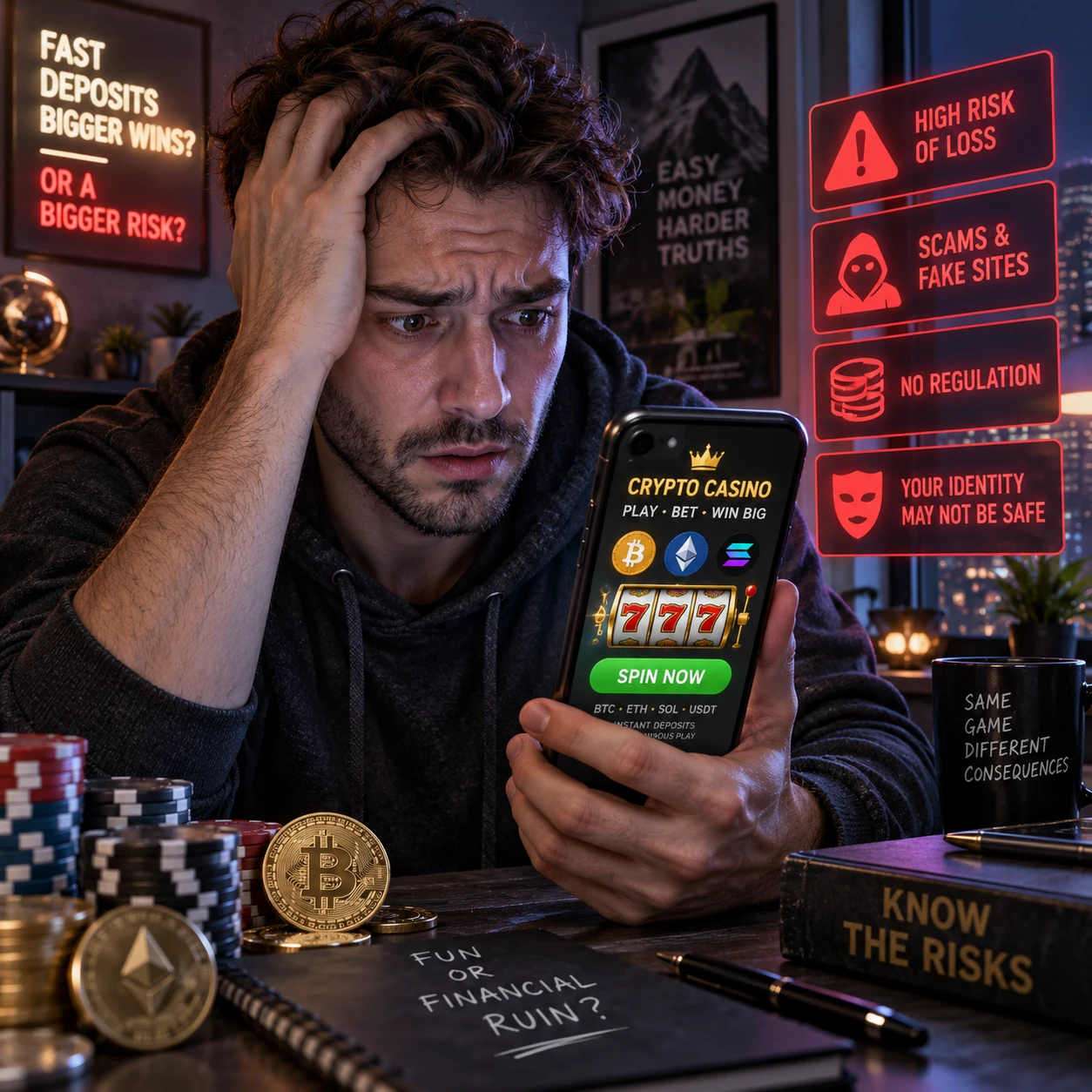
I've spent a fair bit of time digging into how UK players actually use crypto casinos, and one thing keeps jumping out at me: the speed and convenience that make these platforms so appealing are the exact same things that make problem gambling harder to catch. Back in the day, a bank might flag unusual withdrawals, or a card might just get declined — giving someone a natural pause, whether they wanted it or not. With crypto, that friction is mostly gone. Transactions clear in minutes, sometimes seconds, and there's no bank manager around to ask awkward questions.
That's not me saying crypto casinos are inherently bad, to be clear. Plenty of people play recreationally, enjoy the novelty of blockchain-based games, and never run into trouble at all. But the anonymity and the speed do shift the risk profile. I think it's worth being honest about that instead of pretending it isn't happening. So this guide is my attempt to walk through what problem gambling actually looks like, how it tends to show up differently in a crypto setting, and what UK players can realistically do to stay in control while still choosing among the best crypto casinos available in 2026.
Why Problem Gambling Awareness Matters for UK Crypto Casino Players
Crypto casinos have grown steadily in popularity across the UK these past couple of years. The appeal isn't hard to understand: faster payouts, lower fees, and a sense of privacy that traditional online casinos just can't match. For a lot of players, that genuinely is a better experience.
But here's the catch. The same features that make crypto gambling attractive also strip away some of the natural checkpoints built into regulated fiat gambling. There's no waiting period for withdrawals to make you reconsider a late-night session. Less visibility, too, for family members who might otherwise spot spending patterns on a joint bank statement. And I think it's precisely because of this reduced friction that recognising problem gambling behaviour early matters so much — both for yourself and for anyone you care about who plays regularly.
What Is Problem Gambling? Defining the Behaviour
Problem gambling, according to organisations like GamCare and guidance referenced by the NHS, isn't simply about how much money someone spends. It comes down to a loss of control — when gambling starts interfering with someone's finances, relationships, work, or mental health, and they keep going anyway, despite the fallout.
Recreational play, by contrast, stays within set limits. The person can walk away. Take breaks without discomfort. Treat losses as the price of entertainment rather than something to chase down. The distinction matters because crypto's instant settlement and round-the-clock access can speed up the slide from recreational to problematic far quicker than traditional gambling ever managed.
Common Myths About Crypto Gambling Risk
I keep running into the same misconception — that crypto gambling is somehow 'safer' because it feels more controlled, more private. In reality, it's often the opposite. That sense of anonymity can actually reduce accountability, making it easier to gamble without anyone noticing until things have gone quite far. There's also a myth floating around that because blockchain transactions are transparent, players naturally self-monitor better. In practice? Most people don't review their wallet history the way they'd check a bank statement, so that transparency rarely turns into real self-control.
Key Warning Signs to Watch For
Whether you're assessing your own habits or worried about someone close to you, there are practical signs worth keeping an eye on. I've found it helpful to split these into financial and emotional categories, since they tend to show up in pretty different ways.
Financial Red Flags
- Chasing losses by increasing bet sizes to 'win back' money
- Using multiple crypto wallets to obscure how much is actually being spent
- Borrowing money, including from friends or short-term loans, specifically to keep playing
- Converting savings or investment holdings into crypto purely to fund gambling sessions
Emotional and Social Red Flags
- Noticeable mood swings tied directly to wins or losses
- Being secretive about gambling activity, including hiding wallet apps or deleting transaction history
- Withdrawing from family, friends, or usual social activities
- Neglecting work, household responsibilities, or basic routines because of time spent playing
Choosing Platforms Responsibly When Researching Options
If you're comparing platforms, it's worth looking past the bonuses and the game selection for a second. The presence of genuine responsible-gambling tools — deposit limits, self-exclusion options, reality checks, session time trackers — tells you a lot about how seriously an operator actually takes player welfare. When researching the best crypto casinos, UK players should prioritise sites that make these safeguards easy to find and use, not buried three menus deep where nobody will stumble on them.
Beyond the platform itself, it's worth thinking about personal support alongside whatever tools a casino offers. Resources like sidebysidecoaching.co.uk provide dedicated coaching aimed at behaviour change, which can be a genuinely useful complement to any limits you set directly through a gambling site. Platform tools help manage the moment; coaching helps address the habits underneath it.
Practical Steps to Stay in Control
A handful of habits keep coming up as genuinely useful, every time I've looked at how people manage crypto gambling responsibly:
- Set your budget in fiat currency first, then convert only that fixed amount — this avoids the mental slippage that happens when you're thinking purely in crypto units
- Use scheduled time-outs rather than waiting until you feel like stopping
- Review your blockchain transaction history regularly, treating it the same way you'd check a bank statement
- Decide your personal rules — session length, loss limits, win-and-walk-away thresholds — before you start playing, not during
Using UK Support Services Alongside Self-Help Tools
UK players have access to several dedicated resources worth knowing about. GamStop allows self-exclusion across licensed gambling sites, GamCare runs a free helpline and offers structured support, and Gamban provides software that blocks gambling platforms directly on your devices. None of these cancel each other out — using GamStop alongside personal coaching, for instance, tends to produce better long-term results than leaning on a single tool and hoping for the best.
When to Seek Help and How Coaching Can Support Recovery
I think there's a tendency to treat 'seeking help' as a last resort — something you only reach for once things have properly fallen apart. Honestly, the earlier it happens, the better the outcome tends to be. Therapy, peer support groups, and professional coaching each offer something different but complementary: therapy digs into the underlying psychological patterns, peer groups provide shared accountability, and coaching focuses on practical, sustainable behaviour change rather than simply demanding abstinence.
That last point matters to me, maybe more than it should. Not everyone wants or needs to quit gambling entirely, and treating abstinence as the only valid outcome can push people away from seeking support in the first place. Coaching built around healthier habits, spotting triggers, and setting realistic boundaries tends to stick better for a lot of people than an all-or-nothing approach ever does.
Conclusion – Playing Smart in the Crypto Casino Era
Crypto casinos aren't going anywhere in 2026, and for most UK players, they remain a legitimate form of entertainment. But the speed and privacy that make them appealing also ask for a bit more self-awareness than traditional gambling ever required. Recognising the warning signs early, being honest with yourself about your own patterns, choosing platforms that actually prioritise safer-gambling features, reaching out for support when something feels off — none of this works in isolation. They reinforce each other. Responsible play, not blanket avoidance, is what makes long-term enjoyment possible. And really, that's the goal worth aiming for.